What is it?
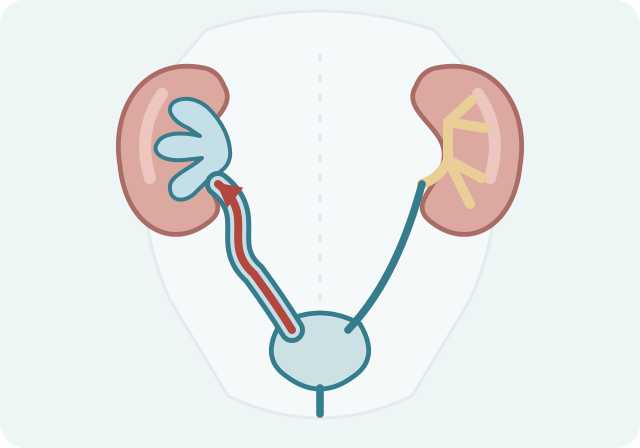
Reconstructs the ureter’s entry into the bladder to treat reflux or distal obstruction.
Related condition →When is it needed?
Considered for recurrent febrile infections, selected persistent reflux or obstruction affecting the kidney. Not every reflux needs surgery.
How is it done?
- General anaesthesia and access to the bladder.
- A new antireflux connection is created; ureteric remodelling may be needed.
- Temporary catheters or stents depend on the repair.
Alternatives
Observation, bladder dysfunction treatment, selected antibiotic prophylaxis or endoscopic injection, depending on the diagnosis.
Recovery
Hospital stay and activity depend on recovery. Wound care, pain relief and device removal are explained individually.
Risks and follow-up
Possible problems and precautions
Possible infection, bleeding, obstruction, persistent reflux or temporary retention. Seek advice for fever, severe pain or difficulty passing urine.
Follow-up checks
Ultrasound and additional tests depend on progress; bladder and kidney function are also monitored.
Frequently asked questions
Do both sides need surgery?
Only when the findings for each ureter justify it.
Is a JJ stent always needed?
No; this depends on anatomy and reconstruction.
Does it prevent every infection?
No. Constipation and bladder dysfunction can still contribute.