What is it?
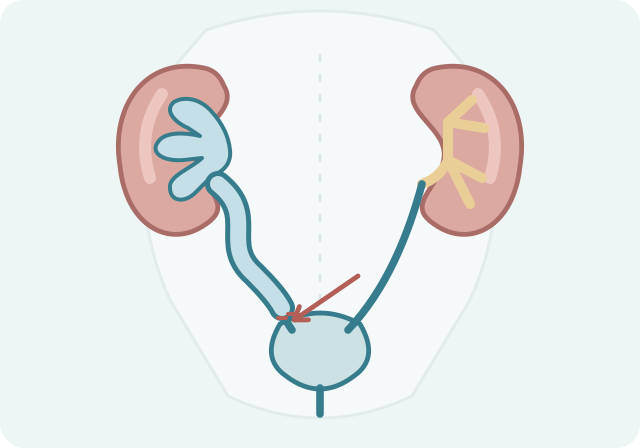
Treatment depends on whether the enlarged ureter has obstruction, reflux or both.
Related condition →When is it needed?
Many cases are monitored. Intervention is considered for infections, symptoms, worsening drainage or reduced kidney function.
How is it done?
- Tests establish the type of megaureter.
- Selected obstructive cases may undergo endoscopic balloon dilatation.
- Others need reimplantation, remodelling or temporary drainage.
Alternatives
Ultrasound surveillance and individualised infection prevention when appropriate.
Recovery
Recovery differs after endoscopy, reconstruction or diversion. Any JJ stent or drain has a planned removal schedule.
Risks and follow-up
Possible problems and precautions
Infection, new reflux, persistent obstruction or further surgery are possible. Fever with pain or difficulty passing urine needs assessment.
Follow-up checks
Ultrasound and functional tests depend on progress, even when the child feels well.
Frequently asked questions
Does every megaureter need surgery?
No. Some improve with growth and only need monitoring.
Is balloon treatment suitable for everyone?
No; it is an option for selected obstructive megaureters.
Does dilatation disappear straight away?
It may decrease slowly; follow-up assesses progress.