What is it?
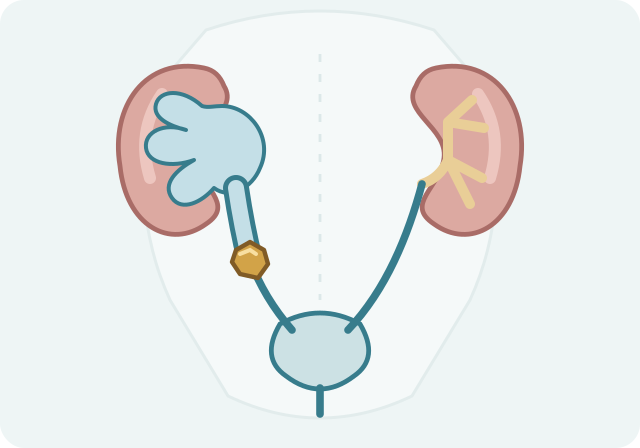
Options to pass, fragment or remove stones from the kidney, ureter or bladder.
Related condition →When is it needed?
Size, location, pain, infection and obstruction guide treatment. Infection with obstruction may require urgent drainage.
How is it done?
- Imaging and laboratory tests are reviewed.
- Options include ureteroscopy, shockwave lithotripsy or percutaneous surgery.
- Residual fragments and the need for a stent are assessed.
Alternatives
Observation of selected stones and medical treatment when appropriate; not every stone needs surgery.
Recovery
Activity and discomfort depend on the technique. A JJ stent may cause temporary symptoms and needs planned removal.
Risks and follow-up
Possible problems and precautions
Infection, bleeding, urinary tract injury or residual fragments are possible. Fever with pain requires urgent assessment.
Follow-up checks
Investigating the cause, analysing the stone and individualising prevention help reduce recurrence.
Frequently asked questions
Can treatment be completed in one session?
Not always; some stones need several procedures.
Are all stones treated with a laser?
No. The approach depends on the stone and anatomy.
Can stones come back?
Yes; investigating their cause is important.