What is it?
Pyeloplasty repairs an obstruction at the ureteropelvic junction, where the renal pelvis meets the ureter. It aims to improve urine drainage and protect kidney function.
Related condition: Pelviureteric junction obstruction →When is it needed?
Kidney dilatation does not always require surgery. An operation may be considered for obstruction affecting function, deterioration on follow-up or symptoms such as pain or febrile infections. Ultrasound, renography and clinical progress guide the decision.
How is it done?
Under general anaesthesia, the narrowed segment is removed and a wider connection is created. Open or laparoscopic surgery may be used, depending on the anatomy and the individual patient.
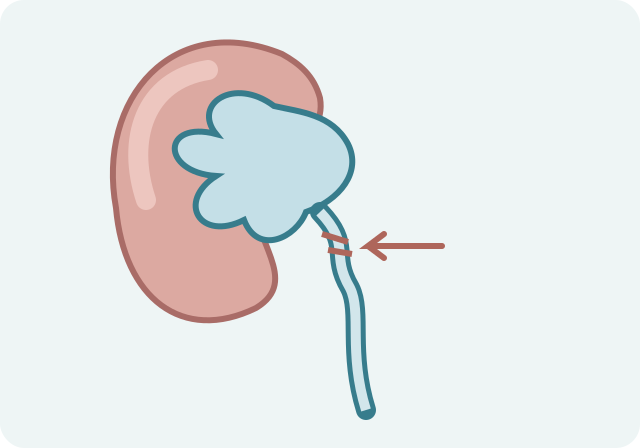
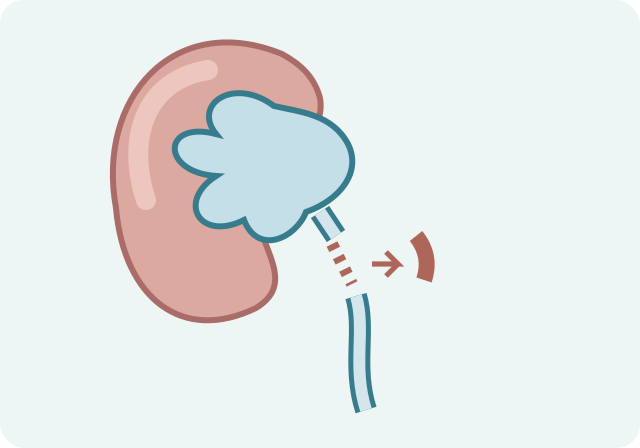
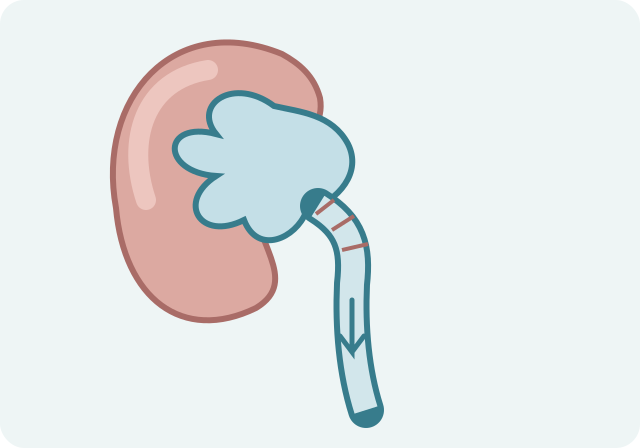
Illustrations of the repair principle; they do not represent every anatomical variation.
Alternatives
Monitoring may be appropriate without significant obstruction or deterioration. Temporary drainage and other procedures are reserved for selected situations. Alternatives are discussed individually.
Recovery
Hospital stay and return to school or physical activity depend on age, surgical approach and recovery. Discharge advice covers pain relief, wound care and temporary activity limits. Follow the treating team’s individual instructions.
Catheters and stents
A temporary internal JJ ureteric stent, external drain or bladder catheter may be needed. If a JJ stent is inserted, its removal is planned and may require another anaesthetic.
Risks and follow-up
Risks include bleeding, infection, urine leakage or recurrent narrowing; occasionally another procedure is needed. Follow-up includes ultrasound and, when indicated, renography.
When should you seek advice after surgery?
Contact the treating team or seek urgent care for fever, uncontrolled pain, persistent vomiting, difficulty passing urine, or wound or drain problems.
Frequently asked questions
Does every hydronephrosis need surgery?
No. Many cases are monitored; decisions depend on obstruction, kidney function and progression.
Will all kidney function recover?
Preserving function is the aim. Recovery depends on previous damage and cannot be guaranteed.
Will the dilatation disappear immediately?
Not necessarily. Dilatation may persist after repair and is assessed during follow-up.