What is it?
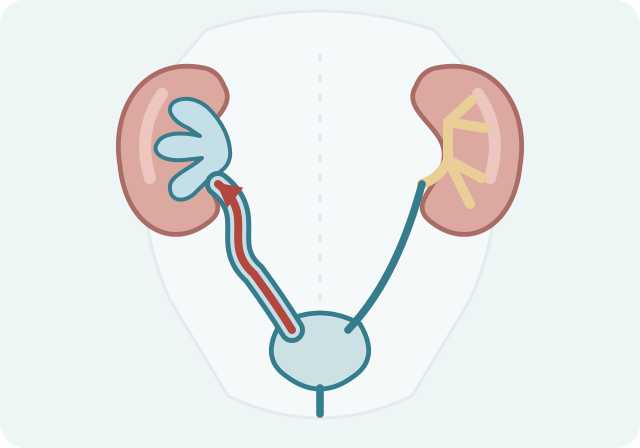
Injection of a bulking material beneath the ureteric opening to improve closure and reduce reflux.
Related condition →When is it needed?
For selected reflux, considering grade, infections, kidney function and bladder function.
How is it done?
- A cystoscope is passed through the urethra under general anaesthesia.
- Material is injected around the ureteric opening.
- The appearance and drainage are checked.
Alternatives
Observation, antibiotic prophylaxis when indicated, or ureteric reimplantation. Not every reflux needs intervention.
Recovery
Often a day-case procedure. Mild stinging or blood-tinged urine may occur; discharge depends on recovery.
Risks and follow-up
Possible problems and precautions
Reflux may persist; infection and, rarely, obstruction can occur. Seek advice for fever, significant pain or difficulty passing urine.
Follow-up checks
Ultrasound and reflux assessment are individualised. Another injection or a different approach may be needed.
Frequently asked questions
Is cure guaranteed?
No. Results depend on the reflux and individual patient factors.
Is a skin incision needed?
Usually not; access is through the urethra.
Can antibiotics be stopped?
Only when advised by the treating team.