The normal urinary bladder
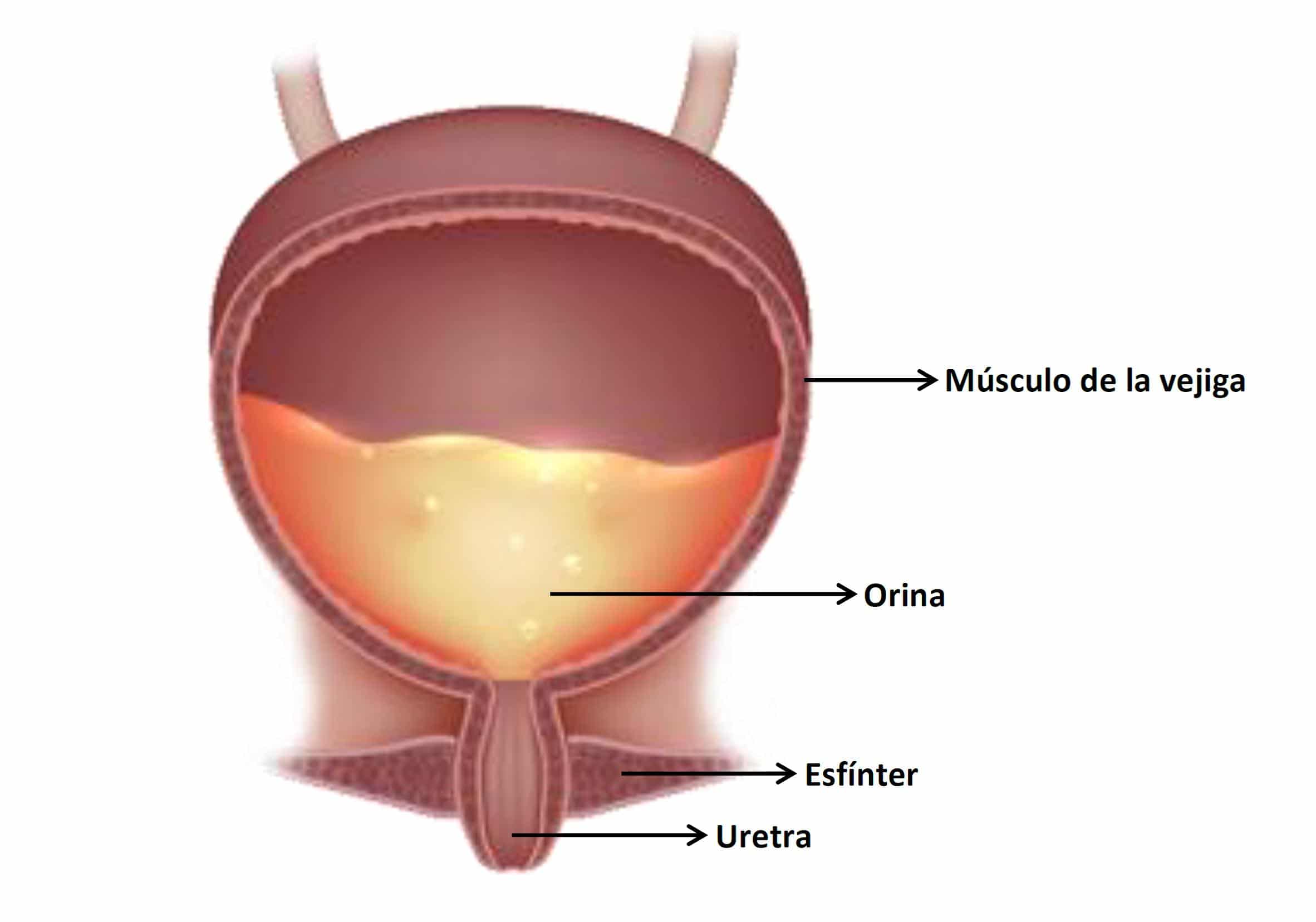
The bladder is a stretchy sac made of muscle. This muscle differs from those in our arms or legs because we cannot control it voluntarily. Another muscle, the sphincter, surrounds the urethra, the tube through which urine leaves the body. It normally stays contracted without us noticing, to prevent urine leakage. When everything works well, the bladder functions as follows:
- As the bladder fills with urine, the bladder muscle needs to stay relaxed and gradually stretches. The desire to go to the toilet increases progressively.
- When we need to pass urine, we find a toilet and get ready. At this point, the bladder muscle is still relaxed!
- We then relax the sphincter muscle, opening the tap and allowing urine to flow out.
- This triggers a reflex that makes the bladder muscle contract involuntarily. We do not squeeze or strain to pass urine! We simply relax the sphincter and urine flows out by itself.
- The sphincter stays relaxed throughout the bladder contraction, and the bladder contracts until it is completely empty.
Common causes of bladder dysfunction
The most common cause in children is an overactive bladder. The bladder muscle contracts involuntarily while the bladder is filling, before it is completely full. This causes a sudden and unexpected urge to pass urine and forces the child to tighten the sphincter to prevent leakage. Even so, urine may leak before they reach the toilet.
Overactive bladder is the most common cause of bladder dysfunction in children.
Parents often think their child does not notice the need to pass urine. In reality, the bladder does not warn the child that it is about to contract.
Other children habitually hold urine for too long, using holding manoeuvres such as crossing their legs, pressing their genitals with their hands or squatting with their heels against their genitals. Many of these children may eventually develop an overactive bladder.
Another well-known cause of bladder overactivity is a urinary tract infection, because bacteria irritate the bladder. However, most children with an overactive bladder do not have urinary tract infections. Infections are more common in children who hold urine for a long time or do not empty their bladder completely.
Many people do not realise that constipation can cause bladder overactivity. A distended bowel presses against the bladder from behind and causes it to start contracting too early.
Another common problem is that the bladder does not empty completely during urination. This is more common in children who contract the sphincter while passing urine, called dysfunctional voiding, or who hold urine for too long. Incomplete emptying can lead to urinary tract infections. Some children have both an overactive bladder and incomplete bladder emptying. Constipation can also cause or worsen both problems.
What can be done to improve bladder function?
Bladder problems can usually be treated relatively easily by changing habits and helping children take control of their bladder. These are some basic rules to follow:
- Pass urine regularly, every 3 hours or 6 times a day: on waking, mid-morning, at lunchtime, mid-afternoon, at dinner time and before bed.
- Do not rush! Allow time for the bladder to empty completely, and do not strain to make urine flow faster. When sitting on the toilet, both feet should be supported on the floor or a stool.
- Drink plenty of fluids. Drinking more than one litre of water a day is recommended. Avoid sugary or fizzy drinks.
- Boys may pass urine standing up, as long as they do not rush and no drops are left to empty.
- Watch for signs of constipation and treat it if present.
- Explain how the bladder works. This helps the child understand the problem and cooperate with treatment.
I hope you enjoyed this post and, above all, found it useful in understanding how the bladder works. This is the first step towards addressing any bladder problems.
In the next posts, we will look more closely at each of the main bladder problems and discuss the treatments we can offer. Do not miss them!