
What is it?
Laparoscopy is a form of minimally invasive surgery. The surgeon uses small incisions in the abdomen to insert a camera and narrow instruments. The camera provides a magnified view of the surgical area on a screen.
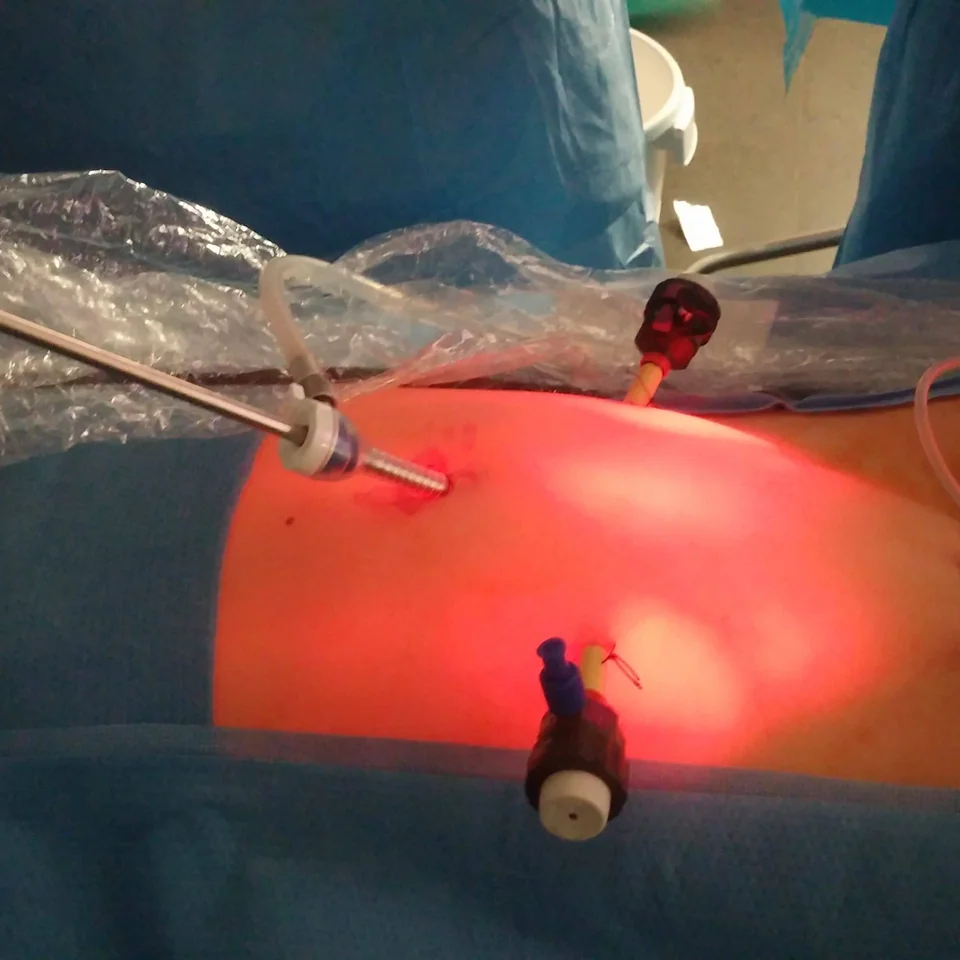
When is it needed?
When abdominal urologic surgery is needed, laparoscopy is often the preferred approach if the child’s anatomy and health allow it. Examples include nephrectomy (removing a kidney), heminephrectomy (removing the affected part of a duplicated kidney), pyeloplasty (repairing a narrowing where the kidney meets the ureter), and ureteroureterostomy (joining two ureters to improve drainage). Laparoscopy may also be considered for selected ureteral reimplantations and some megaureter repairs.
How is it done?
- The child receives general anesthesia. The surgical team makes small incisions for the camera and instruments.
- Carbon dioxide (CO₂) is usually used to create space in the abdomen so the surgeon can see and work around the organs.
- The surgeon performs the planned repair or removal. The instruments are then removed and the incisions closed. A temporary catheter or stent may be needed, depending on the operation.
Alternatives
Open surgery may be the best option in some cases. Robot-assisted laparoscopy is also an option for selected procedures. The team recommends an approach based on the operation and the child’s anatomy, age, and medical history.
Recovery
Small incisions can make recovery easier. The hospital stay, wound care, and return to school or sports depend on the operation and how the child recovers. At discharge, the team will explain home care and the follow-up plan.
Risks and follow-up
Risks include bleeding, infection, and injury to nearby structures. The surgeon sometimes needs to switch to open surgery to finish safely. Follow-up depends on the procedure performed.
Frequently asked questions
Will my child need a catheter?
It depends on the operation. If a bladder catheter or ureteral stent is needed, the team will explain when and how it will be removed.
What if my child has had abdominal surgery before?
The team will review prior operations and consider the possibility of scar tissue before recommending an approach.