When a child needs a urine sample, the hardest part is often catching their wee at the right moment. But collecting urine is only part of the task: keeping germs from the skin or container out of the sample matters too. This guide explains the basics when a urinary tract infection is being investigated. Instructions from your urologist, healthcare centre or laboratory take priority over the information given here.
Why does careful collection matter?
A contaminated sample may grow bacteria that did not come from the bladder. This can mean repeating the test and make it harder to decide whether treatment is needed. It is not the family's fault: obtaining a reliable sample from a baby can be difficult even in a healthcare setting.
What should we prepare?
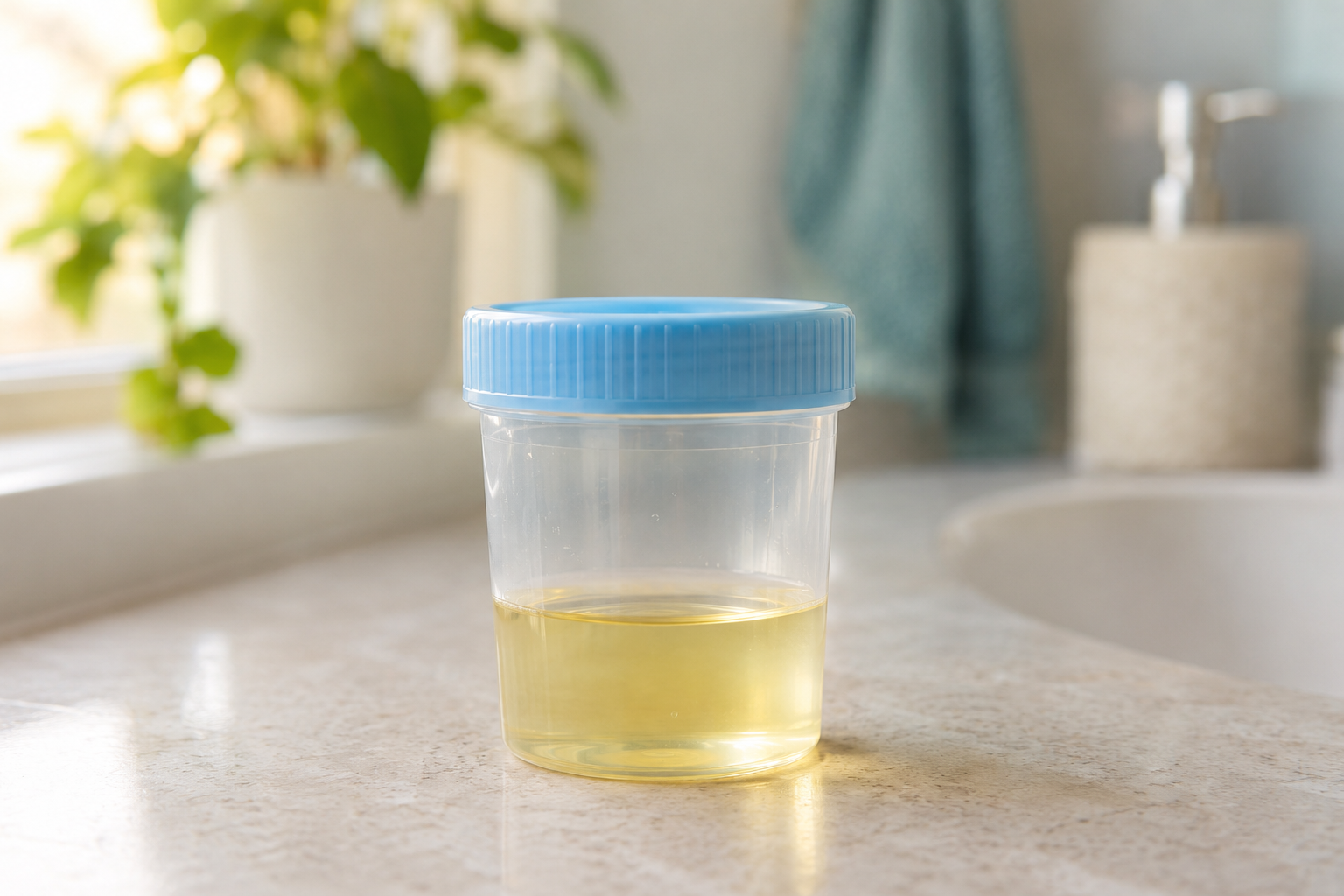
Get a sterile specimen container from your healthcare service or pharmacy. Do not use a household jar, even if it looks clean. Before starting, check where to return the sample and the opening hours. Wash your hands and prepare everything before removing a nappy or taking your child to the toilet. Explain what will happen in simple words and protect their privacy.
How do we collect urine from a toilet-trained child?
Gently clean the genital area as instructed. Washing with soap and water, using a clean sponge reserved for your child or a clean cloth, and rinsing well is usually sufficient. Clean-catch or midstream collection does not require a sterile field or sterile gloves, and disinfectants such as povidone-iodine are not needed. The container itself must, however, be sterile.
For girls, clean from front to back; for boys, never force the foreskin back. Avoid touching the inside of the pot or lid.
Let your child start weeing into the toilet, then catch some urine once the stream is flowing: this is a midstream sample. Try not to let the pot touch the skin. Close it securely afterwards. You do not need to fill it to the top; if the container contains a preservative or has a fill line, ask for specific instructions about the amount needed.
What if my child still wears nappies?
The team will recommend a method based on your child's age, condition and how urgently the sample is needed. If they advise a clean catch, remove the nappy, clean the area and wait with the pot ready to catch urine directly without touching the skin. This may take patience and more than one attempt.
Adhesive collection bags are also often used, particularly for an initial urine test. If you are advised to use one, check it frequently, remove it as soon as your child wees and replace it if they have not passed urine after about 30 minutes, cleaning the area again as instructed by your healthcare service. Bags are easily contaminated and are not the preferred method for confirming an infection by urine culture.
If the sample is contaminated or the result suggests infection, another sample using a more reliable method may be needed, even if contamination is not reported. This may require a catheter sample or, in selected circumstances, suprapubic aspiration, performed by professionals in a healthcare setting. Do not squeeze urine from a nappy or collect it from a used potty.
How should we store and transport it?
Record the time and collection method, and label the container as instructed. Return it as soon as possible. If there will be a delay, ask whether it needs refrigeration and what the maximum delay is: this depends on the container and laboratory. As a practical aim, the sample should be processed as soon as possible, preferably within the first hour if kept at room temperature. The Royal Children’s Hospital recommends testing within this time. This is not a universal cut-off, however: NICE recommends immediate refrigeration or a suitable preservative container if culture cannot be performed within four hours. Always follow the laboratory’s instructions; do not leave the sample at room temperature for hours or add water or preservatives yourself.
Sources on timing: Royal Children’s Hospital; NICE NG224, 1.1.17.
When should the sample be collected and antibiotics started?
The paediatrician or paediatric urologist will usually request the test and interpret the results. Whenever possible, the sample should be collected before the first antibiotic dose, because treatment can make the bacteria harder to identify.
If the symptoms and initial testing —dipstick, urine microscopy or urine flow cytometry— suggest an infection, the doctor may advise starting antibiotics without waiting for the culture. Completing the culture result and, where appropriate, antibiotic susceptibility testing usually takes around two or three days, although preliminary information may be available sooner. Once results arrive, the clinician confirms the diagnosis and continues, adjusts or stops treatment. An isolated abnormal test result does not automatically mean antibiotics are needed.
Attempts to obtain a sample must not delay care or urgent treatment. A baby under three months with a temperature of 38 °C or higher needs urgent assessment. In babies and young children, infection may cause fever, lethargy, irritability, vomiting or poor feeding without obvious discomfort when weeing. Seek immediate help if your child is hard to wake or has difficulty breathing, and urgent advice if they repeatedly vomit, cannot drink or pass much less urine.
What matters when interpreting the result?
A urine culture must be considered alongside symptoms, initial testing and the collection method. Several situations affect its interpretation:
- Previous antibiotics. These may suppress bacterial growth and produce a negative culture despite an infection. Tell the team which medicine your child was taking and when the last dose was given.
- An indwelling catheter or intermittent catheterisation. Bacteria are often present in the urine without an infection. If there are no symptoms attributable to a urinary tract infection, this may be asymptomatic bacteriuria, which generally does not require antibiotics. There are exceptions, such as before certain urological procedures. Children with a neurogenic bladder may have different symptoms from usual, which need assessment by their team.
- Babies or known urinary tract abnormalities. Urinary tract dilatation, vesicoureteral reflux and other abnormalities may justify a lower threshold for obtaining a reliable sample, further investigation and starting treatment when infection is suspected. Decisions depend on age, fever, general condition and the type of abnormality; this does not mean treating every positive culture.
- Possible contamination. Tell the team if the pot touched the skin, stool entered it or there were problems with collection or storage. This can help prevent a false diagnosis of infection and unnecessary antibiotics.
This is general information and does not replace an individual assessment.
Further reading
Sources
- EAU/ESPU, Paediatric Urology 2026, capítol 12
- NICE NG224, 27/07/2022, recomanacions vigents consultades
- RCH, Urine tests, revisat juny 2026
- CUH, recollida al vol, aprovat 14/01/2025
- infoKID, actualitzat 15/06/2026
- RCH, guia clínica d’infecció urinària
- Queensland Children’s Hospital, recollida de mostra
- UKHSA / RCGP TARGET, full per a famílies, juliol 2026
- NICE NG143, febre en menors de 5 anys
- AEPap, algoritme d’infecció urinària, 04/12/2025
- Guía-ABE, presa de mostres microbiològiques
- IDSA 2019, guia vigent de bacteriúria asimptomàtica
- NICE NG113, infecció associada a catèter
- AEPap, informació per a famílies sobre urocultiu