
What is it?
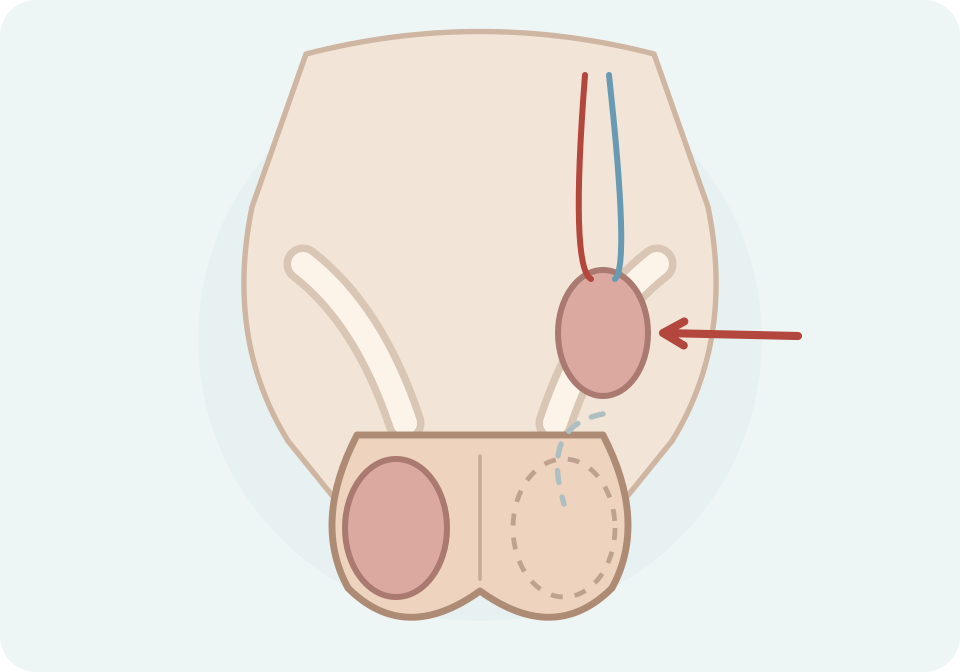
Moving and securing an undescended testis in the scrotum.
Related condition →When is it needed?
Indicated for persistent undescended testes. Retractile testes do not routinely need surgery, but may need monitoring.
How is it done?
- The testis is located; a nonpalpable testis may require laparoscopy.
- Necessary attachments are released while protecting its blood supply.
- It is secured in the scrotum in one or several stages.
Alternatives
Observation depends on diagnosis and age; it cannot indefinitely replace treatment of persistent undescended testes.
Recovery
Follow wound care advice and temporarily avoid activities causing pressure or blows to the scrotum.
Risks and follow-up
Possible problems and precautions
Possible infection, bruising, re-ascent or atrophy. Sudden pain before or after surgery needs assessment.
Follow-up checks
Position and growth are reviewed. Surgery does not eliminate all future risks associated with undescended testes.
Frequently asked questions
Could two stages be needed?
Yes, particularly for some intra-abdominal testes.
Can an absent testis be recovered?
No; surgery first clarifies whether and where it exists.
Is normal fertility guaranteed?
No; previous testicular development also matters.